
Filippo Cavallo – Università di Firenze
Talk: “Human-Centred Service Robotics for Assistance and Rehabilitation: From Personalised Human Modelling and Interaction to Real-World Deployment”
Date and Time: October, 23rd 2026, 9:30-10:00
Where: Aula Magna (Floor +3, Building A/B)
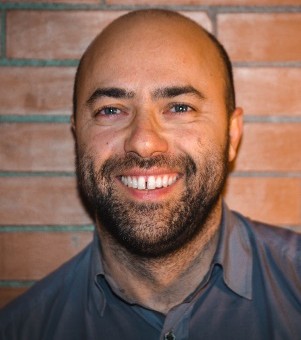 Filippo Cavallo is Associate Professor in Biomedical Robotics, Human Robot Interaction and Biomechatronics and is leading the BioRobotics and Biomedical Laboratory at the University of Florence, Department of Industrial Engineering, Florence, Italy. He received the Master Degree in Electronics Engineering, Curriculum Bioengineering, from the University of Pisa, Italy, and the Ph.D. degree in Bioengineering at the BioRobotics Institute of Scuola Superiore Sant’Anna, Pisa, Italy. He was JSPS visiting researcher at the Takanishi Lab, Waseda University, Tokyo, Japan. He was also expert member to the rapporteur from the European Commission within the INT/852 – Digital transformation / health and care, COM(2018) 233 final, European Economic and Social Committee. The objectives of his research activities are to promote and evaluate novel service robotics for active and healthy ageing, to identify and validate disruptive healthcare paradigms for neurodegenerative and chronic diseases, focusing on prevention and support for physical and cognitive declines, to optimize the management of working life for improving efficiency, security and QoL of workers in industrial settings. The main scientific and technological challenges concern social robotics, human robot interaction, wearable sensors, Internet of Things and artificial intelligence for robot companion and healthcare applications. He is co-chair of the IEEE Technical Committee on Human Robot Interaction and Collaboration and Associate Editor of IEEE Robotics and Automation Letters. In addition, he contributed to the International Conference of Social Robotics (General chair in 2022 and Program Chair in 2025); he was Program Co-Chair and Publication Chair of the IEEE/RSJ International Conference on Intelligent Robots and Systems (IROS 2024) and Program Co-chair of the IROS2027 in Florence. He participated in various National and European projects and is Editorial Board member of different international journals, member of the scientific committees of several conferences and author of more than 250 papers on conferences and ISI journals. He is also co-founder of two spin-off companies, the Co-Robotics in the field of service robotics and CoAImed in intelligent wearables for healthcare.
Outline of the Talk
Robotics and related technologies are creating new opportunities to support people in everyday life, at home, in urban environments and at work. These opportunities bring multidisciplinary scientific challenges at the intersection of engineering, neuropsychology and clinical care, particularly in neurodegenerative and chronic diseases. A central question is how robots can understand people and adapt their assistance to evolving needs. Drawing on research at the Biomedical and Robotics Lab, University of Florence, this talk explores how human movement and behaviour analysis, personalised modelling and human–robot interaction can advance service robotics for assistance and rehabilitation, with a focus on healthcare and active and healthy ageing. The talk then examines the transition towards agentic robotics, where perception, reasoning and planning enable context-aware, adaptive assistance. Particular attention is given to deployment in real-world settings, addressing reliability, user acceptance and meaningful evaluation. It concludes with a research agenda for human-centred robotic systems that can support people over time.
Lorenzo Masia – Technische Universität München
Talk: “Embodied Intelligence for Human Augmentation and Collaborative Robotics”
Date and Time: October, 23rd 2026, 15:30-16:00
Where: Aula Magna (Floor +3, Building A/B)
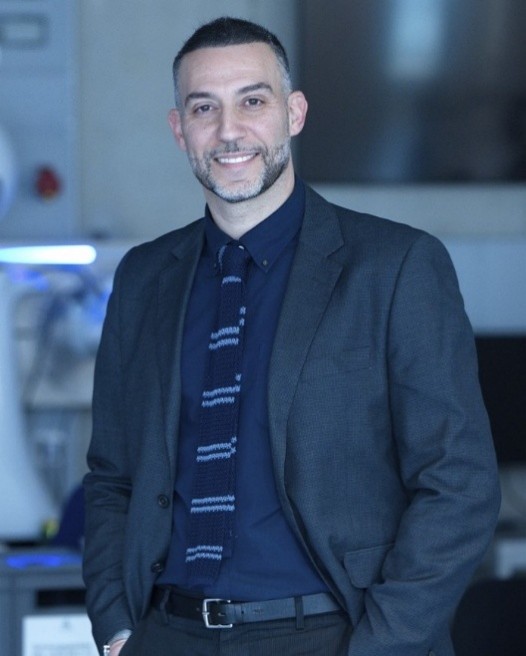
Lorenzo Masia (Rome 1977) began his career in Mechanical Engineering with a degree from Sapienza University of Rome in 2003, followed by a PhD from the University of Padua in 2007. His initial steps into robotics were marked by two-year at Massachusetts Institute of Technology’s Newman Lab for Biomechanics and Human Rehabilitation. He took on the role of Team Leader at the Italian Institute of Technology, specifically in the Robotics Brain and Cognitive Sciences Department. By 2013, Masia he was an Assistant Professor at Nanyang Technological University of Singapore in the School of Mechanical & Aerospace Engineering, where he remained until 2018 and later progressed at the University of Twente, where he held the position of Associate Professor in Biodesign. Professor Masia has been at Heidelberg University in Germany (2019-2024), serving as a Full Professor in Biorobotics & Medical Technology, where he founded the ARIES Lab, focusing on Assistive Robotics and Interactive ExoSuits at the Institute of Computer Engineering (ZITI). From the 1st of October 2024, he is Professor in “Intelligent Bio-Robotic Systems” and Executive Director of the Munich Institute for Robotics and Machine Intelligence (MIRMI) at the Technical University of Munich (TUM), one of most worldwide renown Robotics Institute. During his directorate at TUM, together with the German Company Neura Robotics, he funded the NEURA TUM RoboGym which is a multimillion investment for building the largest European training and data farming center for industrial AI and Humanoids, and for which he will serve as Director after its opening in October 2026. Professor Masia’s work has garnered international acclaim, evidenced by multiple international awards at leading conferences in Biorobotics and Robotic Rehabilitation, including two IEEE Best Paper Awards and three IEEE Best Student Paper Awards, among others. In addition to his research and teaching, Professor Masia holds significant editorial roles with several prestigious journals, IEEE Transaction on Robotics, IEEE Robotics and Automation Letters, IEEE Transaction on Neural Systems and Rehabilitation Engineering, Journal of Neuroengineering and Rehabilitation and Wearable Technologies. He has also played key roles as Program Chair in organizing major IEEE RAS conferences in the field, and he has been the General Chair for IEEE RAS EMBS BIOROB 2024 (1-4 September 2024, Heidelberg, Germany)
Outline of the Talk
Embodied intelligence is not confined to algorithms; rather, it emerges from the dynamic interaction among the human body, the robotic system, the task, and the surrounding environment. This presentation introduces a human-centred vision of embodied intelligence in which wearable and collaborative robots act as symbiotic partners, augmenting human capabilities while preserving agency, adaptability, and active participation. The first part focuses on soft wearable robots, or exosuits: lightweight, clothing-like devices designed to function as an external layer of muscles rather than as rigid skeletal structures. Their development is explored through three closely interconnected pillars: actuation, control, and awareness. Advanced tendon-driven mechanisms, physiological and biomechanical sensing, adaptive myoelectric control, magnetic tracking, and gait-phase estimation enable assistance to be personalised to the needs and capabilities of each wearer. Artificial vision and context-aware control further allow exosuits to recognise transitions between activities—including walking, stair climbing, sitting, standing, and running—and adapt their assistance in real time. The presentation then extends the concept of embodied intelligence from wearable augmentation to collaborative robotics. It introduces a new generation of collaborative workcells in which exosuits, sensing technologies, and cobots exchange information bidirectionally. Wearable systems provide insight into human intention, posture, movement, and physical effort, while the cobot adapts its behaviour to the user’s capabilities and changing physiological state. By combining wearable sensing, markerless motion capture, magnetic localisation, and human-aware robot control, this approach advances beyond simple coexistence towards genuine physical collaboration between humans and robots. Finally, the presentation introduces the TUM–NEURA RoboGym, directed by Prof. Lorenzo Masia and Prof Achim Lilienthal. Located at Munich Airport, this large-scale research and innovation environment is dedicated to Physical AI and human-centred robotics. It integrates humanoid, collaborative, and mobile robots with multimodal sensing, teleoperation, simulation, and high-performance computing to generate real-world robotic data and train robotic foundation models. By connecting scientific research with industrial deployment, the RoboGym provides a unique platform for accelerating innovation in manufacturing and human–robot collaboration.
Elena De Momi – Politecnico di Milano
Talk: “Beyond Automation: Designing Trustworthy Autonomy in Surgery”
Date and Time: October, 24th 2026, 9:00-9:30
Where: Aula Magna (Floor +3, Building A/B)

lena De Momi received her MSc in Biomedical Engineering in 2002, PhD in Bioengineering in 2006, and she is currently Full Professor in the Electronic Information and Bioengineering Department (DEIB) of Politecnico di Milano. She is co-founder of the Neuroengineering and Medical Robotics Laboratory, in 2008, being responsible of the Medical Robotics section. IEEE Senior Member, she is currently Senior Editor of the Int. Journal of Robotics Research and Editor of the IEEE Transaction on Robotics and Associate Editor of the Robotics and Automation Letters and of the IEEE Transaction on Biomedical Engineering. She was Publication Chair and Co-Chair for IEEE ICRA 2019, 2023 and 2024, Program Chair of IROS 2025 and Chair of ICRA 2029, in Milan. She is responsible for the lab course and the course on Medical Robotics, of the courses on Healthcare Technology Management and Smart Hospital of the MSc degree in Biomedical Engineering at Politecnico di Milano and of the course in Healthcare Robotics and Active Ageing at MEDTEC (Humanitas University) and she serves in the board committee of the PhD course in Bioengineering and of the National PhD in Robotics and Intelligent Machines.
Outline of the Talk
Surgical robotics is expanding rapidly, yet clinically deployed systems remain predominantly surgeon-controlled. Moving from enhanced dexterity towards meaningful autonomy is therefore not simply a technical challenge: it requires a careful redefinition of how perception, decision-making, action and clinical responsibility are shared between humans and machines. This talk examines the road to autonomous surgery through three connected research directions. First, surgical intelligence can improve scene interpretation, for example by identifying missed mucosal areas and supporting navigation during colonoscopy. Second, context-aware augmentation can support surgeons through image guidance, tracking, augmented reality and shared control in demanding procedures such as lymphadenectomy and spine surgery. Third, task-level automation in microsurgery illustrates both the promise of learned robotic skills and the difficulty of demonstrating safe, robust performance beyond controlled settings. These examples motivate a broader research agenda. Autonomous surgical systems must represent uncertainty, adapt to anatomical and procedural variability, detect and recover from failure, and transfer authority safely between the system and the surgical team. Progress also depends on representative and well-governed clinical data, shared benchmarks, independent evidence of safety and effectiveness, and attention to bias, hallucinations, sustainability and equitable access. The goal is not to redesign the operating room around the robot, nor to replace clinical judgement. It is to develop trustworthy embodied assistants that fit human-centred clinical workflows, extend expert capability, and help make high-quality surgical care safer and more accessible.